
Creating and delivering quality software since 2015
Brightbit Technologies started with a single conviction that has not changed: most businesses do not need more software, they need their existing process to stop leaking. We began with business process automation, grew into product engineering, then into AI and applied research — and all the way through, we have trained the engineers who do the work.
One squad, a fixed cadence, nothing hidden until the end
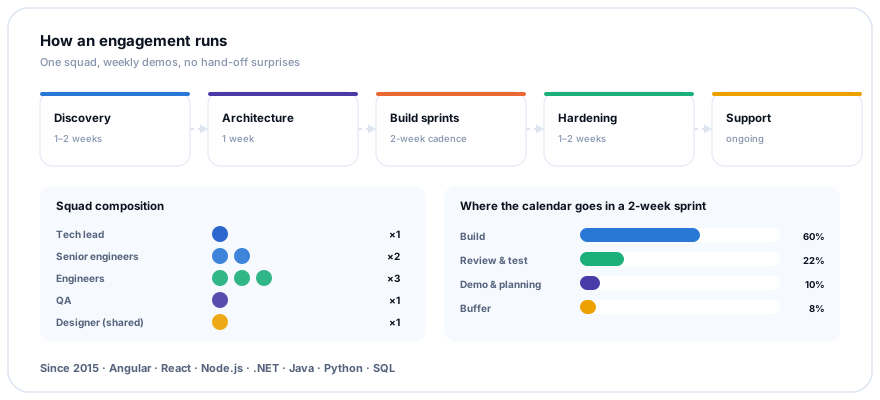
Every engagement runs the same way, whether it is a six-week automation or an eighteen-month platform. You get the same team throughout — no bait-and-switch between the people who pitched and the people who build.
- Written architecture note before code, naming the risks out loud.
- Two-week sprints with a working demo you can click at the end of each.
- Your repository, your cloud account where possible. No hostage-taking.
- Weekly written status including what went wrong, not only what shipped.
- Handover means handover — source, schema docs, runbooks and a trained team.
Five positions we hold, including the inconvenient ones
Boring architecture wins
We choose the technology your team can operate after we leave, not the one that makes a better conference talk. One well-factored application beats twelve services nobody can debug at 9pm.
The process comes before the software
Automating a broken process just makes it break faster. Discovery exists to find that out before you have paid for a build.
We say no to work
We have turned down projects where the timeline was impossible, the data did not exist, or automating a decision would have harmed the people it was applied to. We would rather lose the sale than the reputation.
Training is not a side business
The academy is how we grow engineers we then keep. Interns are taught by the people shipping client work — which is also what keeps our own standards honest.
Accessibility is a requirement
Enterprise software is used for eight hours a day by people who did not choose it. Contrast, keyboard support and screen-reader behaviour are acceptance criteria, not a phase two.
Bad news travels fast, or it should
A slipping milestone is told to you in the week it slips. Every project has one; the difference is whether you hear about it in week six or week sixteen.
How the practice grew
-
Founded on process automation
The first engagements were stock registers, billing and document trails for small manufacturers and distributors — replacing spreadsheets with workflow.
-
First industry suite: e-School Management
A school asked for a fee-collection tool. Discovery showed the problem was upstream, and the answer became a platform we have maintained and extended ever since.
-
Training becomes formal
Ad-hoc mentoring turned into a structured curriculum with gates and certification, because we needed a reliable way to grow engineers ourselves.
-
Hospital Management & remote delivery
Healthcare clients, fully distributed squads, and the offline-first mobile patterns we still use for field applications.
-
Cloud, DevOps and QA as practices
Delivery discipline became a service in its own right: pipelines, infrastructure as code and regression suites for clients as well as for ourselves.
-
AI applications, with governance
Document extraction and forecasting go live — with confidence routing and human review queues designed in from the first sprint.
-
Applied research practice
Research workbenches, study platforms and the reproducibility standard we now apply to every scientific engagement.
-
Performance-linked internship programme
The internship is restructured around published bands and a fortnightly rubric, with an on-roll path for the strongest performers.
Who actually turns up
A standard squad is a tech lead, two senior engineers, up to three engineers, a QA engineer and a shared designer. The lead stays with your engagement from discovery to handover.
- Engineers work on one client at a time, not split across four.
- Every squad has at least one engineer who has run a production incident.
- Reviewers are named. You can ask who approved a change and why.
- Roughly a third of our engineers came through our own academy or internship.
What we ask of clients
The engagements that go well have three things in common, and none of them are about budget.
- One decision-maker who can settle a question within a sprint.
- Access to the people doing the work today — not only to their manager's description of it.
- Attendance at the demo. Fifteen minutes a fortnight prevents most of the expensive misunderstandings we have ever had.
If you cannot commit to those, say so at the start and we will adjust the process rather than pretend.
Work with us, or come and learn with us
Two doors into the same building: bring us a system to build, or join the academy and the internship programme and help build someone else's.